
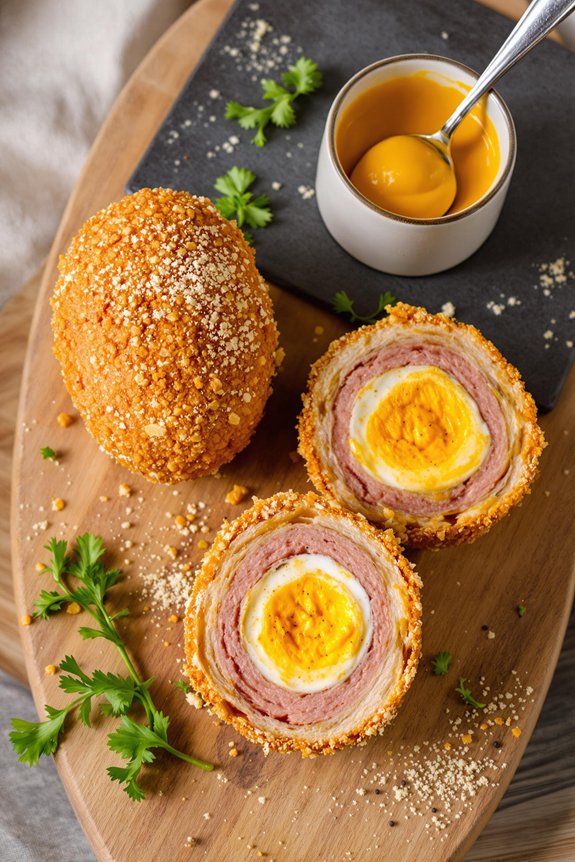

Why You’ll Love these British Scotch Eggs
If you’re looking for a dish that’s simultaneously impressive and comforting, Scotch eggs should be at the top of your list.
These golden-brown beauties combine perfectly boiled eggs wrapped in savory sausage meat, coated in crispy breadcrumbs. They’re versatile too—serve them hot as a main course or cold for picnics and packed lunches.
I’m particularly fond of their textural contrast: the crunch of the outer coating giving way to juicy sausage and then that creamy egg center.
Can anything be more satisfying? Plus, they’re substantial enough to keep hunger at bay for hours.
Who knew British pub food could be so delightful?
What Ingredients are in British Scotch Eggs?
Traditional British Scotch eggs are surprisingly simple to make, requiring just a handful of quality ingredients that come together to create something truly special. The key is using fresh eggs and well-seasoned sausage meat to achieve that perfect balance of flavors.
While they might seem fancy, the ingredient list is actually quite straightforward, making this classic pub fare accessible to home cooks everywhere.
- 4 large eggs (for hard-boiling)
- 1/2 pound sausage meat
- 1 egg, slightly beaten (for coating)
- Cooking oil or fat (for deep frying)
- Seasoned flour (regular flour with salt and pepper)
- Breadcrumbs (fresh work best for ultimate crispiness)
- Salt and pepper to taste
When selecting ingredients for Scotch eggs, quality matters more than you might think. Try to source free-range eggs for better flavor and color in the yolks.
As for the sausage meat, traditional British pork sausage works wonderfully, but don’t be afraid to experiment with different varieties like Cumberland or even a spiced chorizo for a twist.
The breadcrumbs can be store-bought, but if you have time, making your own from day-old bread will elevate the final texture of your Scotch eggs.
And remember, seasoning is essential—a good pinch of salt and freshly ground black pepper makes all the difference between a bland Scotch egg and one that sings with flavor.
Recommended Products

Eggs in a Dash: This hard boiled egg cooker makes up to 7 eggs at once — soft-boiled, medium, or hard-boiled eggs are ready in minutes, no pot of boiling water needed and no stovetop babysitting

RAPID BOILING: Fill measuring cup with water to desired doneness, press the power button and within minutes your eggs will be "Egg-Celent!" Fun and simple to use for family members of all ages! The built-in timer, buzzer and auto-shut off gets it right every time! Faster than conventional stovetop methods!

Eggs in a Dash: In less time than it takes to boil water, the Dash Deluxe Egg Cooker can boil 12 eggs at a time, poach 7 eggs, or cook 1 omelet; you can also steam vegetables, dumplings, and more
How to Make these British Scotch Eggs
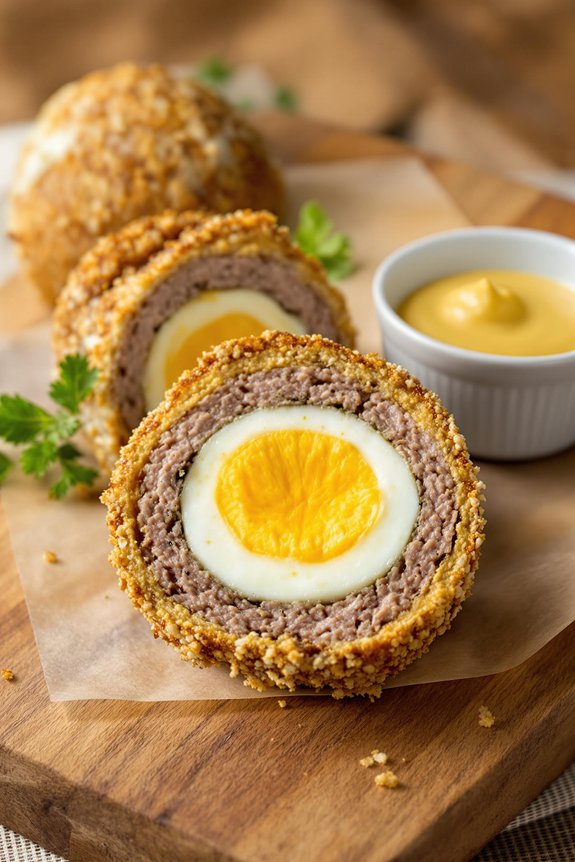
Making Scotch eggs might look complicated, but they’re actually quite straightforward once you break down the process. Start by hard-boiling 4 eggs—but here’s where many go wrong. Place your eggs in cold water and heat them slowly until the water just begins to simmer. Don’t let that water reach a rolling boil, as this can make the egg whites tough and rubbery. Keep them at a gentle simmer for about 30 minutes, then transfer to cold water. This slow cooking method produces perfectly set yolks without that unappetizing gray ring that can form around overcooked ones.
Once your eggs are completely cold (patience is key here), carefully peel off the shells and give them a light dusting in seasoned flour. This helps the sausage meat stick better. Take your 1/2 pound of sausage meat and divide it into four equal portions. Working with slightly damp hands (prevents sticking), flatten each portion and wrap it completely around each egg, making sure there are no gaps or thin spots. The coating should be even all around—about 1/4 inch thick works well.
Next comes the breading: dip each sausage-wrapped egg into 1 beaten egg, then roll in breadcrumbs, pressing gently to confirm they adhere well. For extra crispiness, you can double-dip, but the single coating works beautifully too.
The final step is frying, which needs to be done with care. Heat your oil or fat to exactly 375°F—too cool and your eggs will be greasy, too hot and the outside will burn before the sausage cooks through. For authentic preparation with excellent heat distribution, consider using Mexican cast iron cookware which maintains consistent temperature throughout the frying process. Gently lower each egg into the hot oil and fry until they’re a gorgeous golden brown all over, which typically takes about 5-7 minutes. You want to cook the sausage thoroughly while maintaining that perfect soft-to-medium yolk inside.
After frying, drain your Scotch eggs on paper towels to remove excess oil. They can be served whole or halved to show off that beautiful cross-section—and they’re equally delicious whether enjoyed hot from the fryer or cold the next day with a bit of mustard. The contrast between the crispy exterior, savory sausage layer, and creamy egg center is what makes this British classic so irresistible.
British Scotch Eggs Substitutions and Variations
While the classic Scotch egg recipe remains a beloved standard, you can easily put your own spin on this British favorite with several clever substitutions and variations.
Try using different sausage varieties—chorizo adds a Spanish kick, while Italian sausage brings Mediterranean flair. Not a pork fan? Turkey or chicken sausage works beautifully too.
For the coating, panko breadcrumbs create an extra-crispy exterior.
Vegetarians might enjoy a mushroom and lentil mixture wrapped around the eggs instead of meat.
And speaking of eggs, why not experiment with quail eggs for bite-sized treats? Perfect for parties, those tiny versions disappear in seconds!
Recommended Products

Large Capacity: With two separate oil tanks (Water Capacity: Max 11.6Qt/11L each, Oil Capacity: Max 8.5Qt/8L each), this commercial electric deep fryer allow you fry different types of foods individually and maintain distinct flavors. Perfect for delis, concession stands, snack bars, and parties.

Fast Heating Element: This deep fryer is equipped with a powerful 1750W heating element for each side that provide to fry food quickly and maintain oil temperature. super fast heat up and speedy temperature recovery ensure high performance and let you cook more batches in a shorter time

2-Tank 4 Gal Capacity: The outdoor propane deep fryer features two tanks with a combined capacity of 4 gallons (2 gals each). This allows you to fry larger quantities of food or even cook different types of food simultaneously. Please do not add oil over the Max Fill Line to avoid oil spatter.
What to Serve with British Scotch Eggs
Since Scotch eggs can serve as either a hearty snack or the centerpiece of a meal, choosing the right accompaniments makes all the difference.
I’m partial to serving mine with a tangy mustard sauce or piccalilli, which cuts through the richness perfectly.
For a proper meal, add a crisp green salad with vinaigrette. Think peppery arugula or watercress.
Fancy it up? Roasted vegetables or potato wedges make it substantial.
In summer, nothing beats Scotch eggs with pickled onions and a ploughman’s spread of cheeses and crusty bread.
Divine, isn’t it?
Recommended Products

【Powerful & Faster】Aiheal meat grinder has a powerful motor (300W, 3200W Max locked power). Helps you take less time grinding up bulk batches of meat, making it easy to grind meat during the peak hunting season. Perfect for beef, chicken, pork, venison, fish and more.
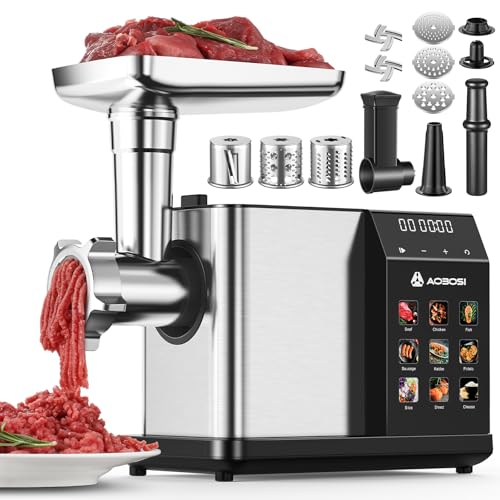
Smart Touch Color Screen & 9 Custom Presets: Aobosi electric meat grinder features a large smart touch color screen with 9 one-touch preset functions for effortless operation. Combined with an intelligent auto-reverse system, it effectively prevents clogging and jamming, ensuring smooth and efficient grinding every time. This meat grinder makes food preparation hassle-free and enjoyable for home use
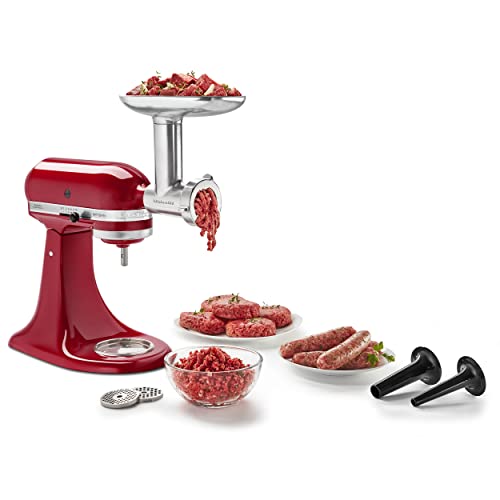
Connect to any household KitchenAid Stand Mixer power hub and use the power of the motor to run the metal food grinder attachment. sold separately.
Final Thoughts
After mastering these traditional British treats, you’ll understand why Scotch eggs have endured for centuries as a beloved portable snack.
There’s something magical about that first bite—crispy breadcrumbs giving way to savory sausage and finally revealing that perfectly cooked egg center.
Don’t worry if your first batch isn’t picture-perfect. Practice makes perfect, and even the wonky-looking ones taste divine.
I’ve found that patience is key, especially when molding the sausage around the eggs.
Why not make a double batch next time? They’ll disappear faster than you can say “British picnic classic.”


