
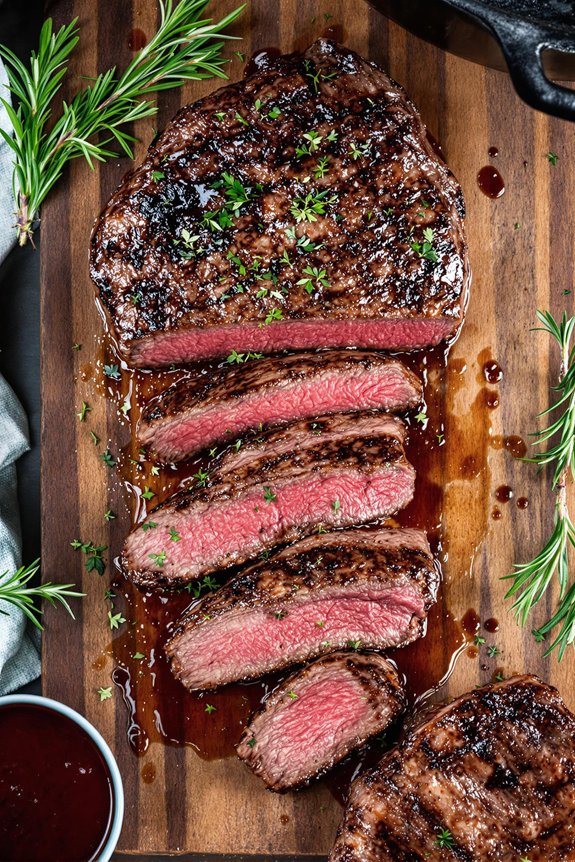
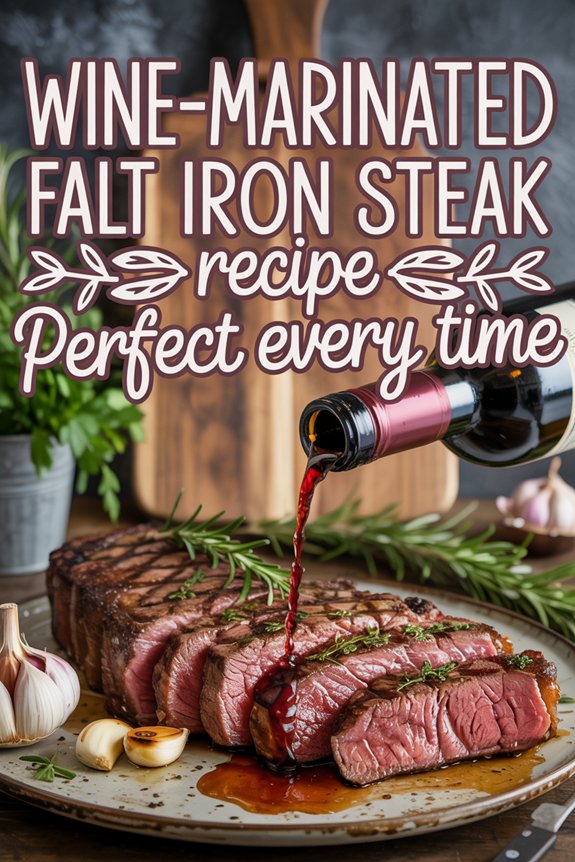
Why You’ll Love this Wine-Marinated Flat Iron Steak
If you’re looking for a dinner that’ll impress without the stress, this wine-marinated flat iron steak is about to become your new go-to recipe.
The Cabernet Sauvignon infuses the meat with a depth that’s simply irresistible, while garlic and herbs create layers of flavor that’ll have everyone thinking you spent hours in the kitchen.
What makes this recipe spectacular? It’s the perfect balance—tender, flavorful meat that cooks quickly over high heat.
And can we talk about that crust that forms when the wine-soaked exterior meets the grill? Heaven on a plate.
What Ingredients are in Wine-Marinated Flat Iron Steak?
This mouthwatering steak recipe calls for a simple yet sophisticated combination of ingredients that transform an already tender cut of meat into something truly special. The magic happens when the rich Cabernet Sauvignon mingles with aromatic herbs and garlic, creating a marinade that infuses the flat iron steak with complex flavor. And honestly, isn’t there something so grown-up about cooking with wine? It makes even a weeknight dinner feel like a special occasion.
- 2 flat iron steaks (about 1 pound each) or 1 flank steak (2 pounds)
- 2 tablespoons olive oil
- 2 garlic cloves, mashed
- 1 teaspoon Italian parsley, chopped
- 1 teaspoon rosemary, chopped
- 1/4 cup Cabernet Sauvignon wine
- Salt, to taste
- Generous amount of freshly ground black pepper
- 1/2 teaspoon dry mustard
When shopping for this recipe, quality matters, particularly with the steak and wine. While the recipe calls for Cabernet Sauvignon, you could substitute another dry red wine you have on hand—just make sure it’s something you’d actually enjoy drinking with your meal. As for the herbs, fresh is definitely preferable to dried, as they’ll release more aromatic oils into the marinade. And that dry mustard? Don’t skip it. This unassuming ingredient adds a subtle tang that balances the richness of the wine and complements the beefy flavor of the flat iron steak perfectly.
Recommended Products

Steakhouse Sear At Home: The Lodge Square Cast Iron Grill Pan delivers high-heat searing and bold grill marks while channeling excess grease away

Double Burner Configuration: The Lodge Double Play Reversible Cast Iron Grill/Griddle covers two burners, offering a generous breakfast grill plate for family breakfasts or meal prep with ease

【2-in-1 Reversible Grill & Griddle】: Unlock a world of recipes with a single reversible griddle pan. One ribbed side creates perfect sear marks on steaks, chops, fish, chicken, and veggies; flip to the smooth side for pancakes, eggs, bacon, burgers, tortillas, and more. Ideal for indoor stovetop or outdoor BBQ
How to Make this Wine-Marinated Flat Iron Steak
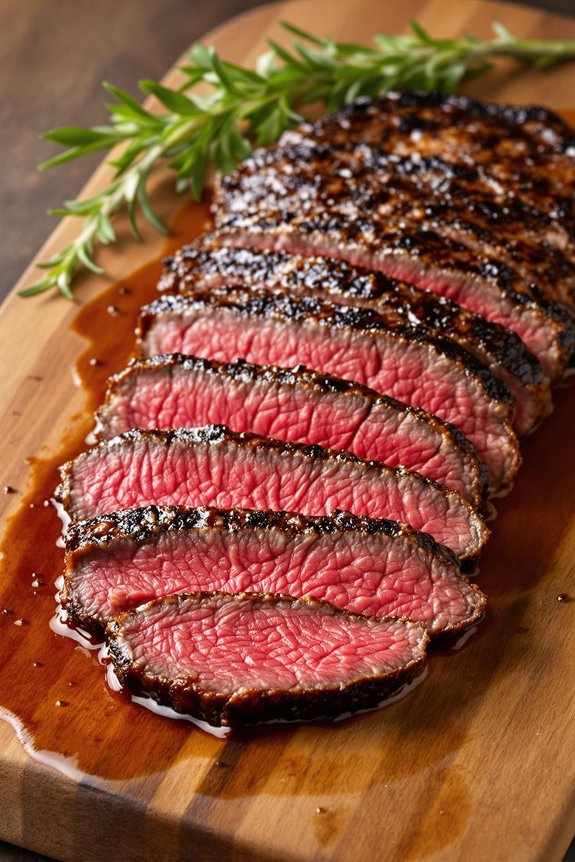
Preparing this elegant steak couldn’t be more straightforward. Start by creating the marinade in a bowl or shallow dish large enough to hold your 2 flat iron steaks (about 1 pound each). Combine 2 tablespoons of olive oil with 2 mashed garlic cloves, creating a fragrant base. Then add the herbs—1 teaspoon each of chopped Italian parsley and rosemary—which will infuse the meat with earthy aromatics.
Pour in 1/4 cup of Cabernet Sauvignon, add a generous amount of freshly ground black pepper, some salt to taste, and 1/2 teaspoon of dry mustard. Give everything a good stir until thoroughly mixed.
Next comes the waiting game, which is honestly the hardest part of this recipe. Place your steaks in the marinade, turning them a few times to make sure they’re well-coated on all sides. Let them rest for one hour at room temperature, which allows the flavors to penetrate the meat without making it mushy.
You might be tempted to marinate longer, but with flat iron steak, an hour is really the sweet spot—any more and the wine’s acidity might start breaking down the meat’s texture too much.
When you’re ready to cook, fire up your grill to high heat. Those beautiful steaks need just 4 minutes per side for a perfect medium-rare finish—that’s where flat iron steaks truly shine. The caramelization from the grill combined with the wine-infused flavors creates a spectacular crust while maintaining that juicy interior.
For professional-grade results, consider investing in premium cookware sets that ensure even heat distribution across your cooking surfaces. Remember to let your steak rest for about 5 minutes after grilling before slicing against the grain. This resting period isn’t just chef pretension; it actually allows the juices to redistribute throughout the meat, resulting in a more tender, flavorful bite.
And really, isn’t that small test of patience worth it for steak perfection?
Wine-Marinated Flat Iron Steak Substitutions and Variations
While this wine-marinated flat iron steak recipe works beautifully as written, you’ve got plenty of room to play with substitutions and variations that can transform the dish to match your pantry or preferences.
Don’t have Cabernet? Any dry red wine works wonderfully—try Merlot, Pinot Noir, or even a bold Zinfandel. The herbs are flexible too. Swap parsley and rosemary for thyme, oregano, or basil.
Can’t find flat iron steak? Flank steak (as mentioned in the recipe) works perfectly, but you could also use skirt steak, hanger steak, or sirloin. Each cut brings its own unique texture and flavor profile.
Isn’t cooking all about making it your own?
Recommended Products

Fast & Accurate: Get precise readings in just 1 second with ±0.9°F accuracy. NSF Certified for trusted food safety, this digital food thermometer features a 4.3 inches food-grade stainless steel meat probe, perfect for grilling, frying, baking, making candy and more

【Lightning-Fast & Highly Accurate】No more lingering over hot grills and ovens! This meat thermometer digital outputs reliable readings within 1–2 seconds with an accuracy of ±1°F/±1°C. Covering an extensive temperature range of -58°F to 572°F (-50°C to 300°C), it instantly tells you the exact internal temperature of your food.

2.0 inches large auto-rotating backlit display: Meat thermometer for grilling has a 180° auto-rotating backlit display, making this kitchen thermometer perfect for left-hand users and allows you to use it in low light conditions
What to Serve with Wine-Marinated Flat Iron Steak
When you’ve got a beautifully wine-marinated flat iron steak sizzling on the grill, what accompaniments deserve a spot on your dinner plate?
I’m a firm believer in letting the star of the show shine, but with thoughtful supporting acts.
A simple roasted potato medley brings earthy comfort, while grilled asparagus or a bright arugula salad cuts through the richness.
For carb lovers, crusty bread is perfect for soaking up those flavorful juices.
And because we’ve already included wine in the marinade, why not pour a glass of that same Cabernet Sauvignon to elevate the entire meal?
Recommended Products

Marinating Container with Lid Set: This set includes 2 stainless steel marinade container with a capacity of 5.6 quarts, each equipped with a sealed lid. The metal container size is suitable for placing in a standard refrigerator shelf. The 2 large capacity stainless steel food storage containers can simultaneously meet the needs of marinating large amounts of meat, storing leftovers, or serving as fermentation containers, making them a powerful assistant for home kitchens, barbecue parties, or party preparations

Stainless Steel Marinade Container Set: you will receive three marinade containers measuring 11.8 x 8.2 x 2 inches, 11.8 x 8.2 x 3.3 inches, 11.8 x 8.2 x 4.7 inches, with different capacity of 3.3 qt, 5.6 qt, 8 qt; Each container comes with a tight-fitting lid; The lids are made of food-grade PP with a flexible silicone seal to keep food fresh longer; They are suitable for marinating various meats, storing leftovers, or baking in the oven

ONE SHALLOW, ONE EXTRA-DEEP TWO SIZES FOR DIFFERENT FOOD PREP NEEDS: This 2-piece set includes a 68 oz shallow tray for steaks, fish, bacon and deli foods, plus a 196 oz extra-deep container for ribs, chicken wings, BBQ ingredients and family leftovers. These large stainless steel food storage containers with lids make it easy to marinate flat and store big.
Final Thoughts
After spending time with this wine-marinated flat iron steak recipe, I’ve come to appreciate its beautiful simplicity and impressive results. The combination of Cabernet Sauvignon, fresh herbs, and garlic creates a flavor profile that elevates this underrated cut to steakhouse quality.
What makes this recipe special is its versatility and foolproof nature. You don’t need fancy equipment or professional skills, just quality ingredients and attention to timing.
The key is respecting that medium-rare sweet spot—overcooking will rob you of tenderness.
I’m convinced this recipe deserves a spot in your regular rotation. Who doesn’t love a dish that seems fancy but requires minimal effort?


