
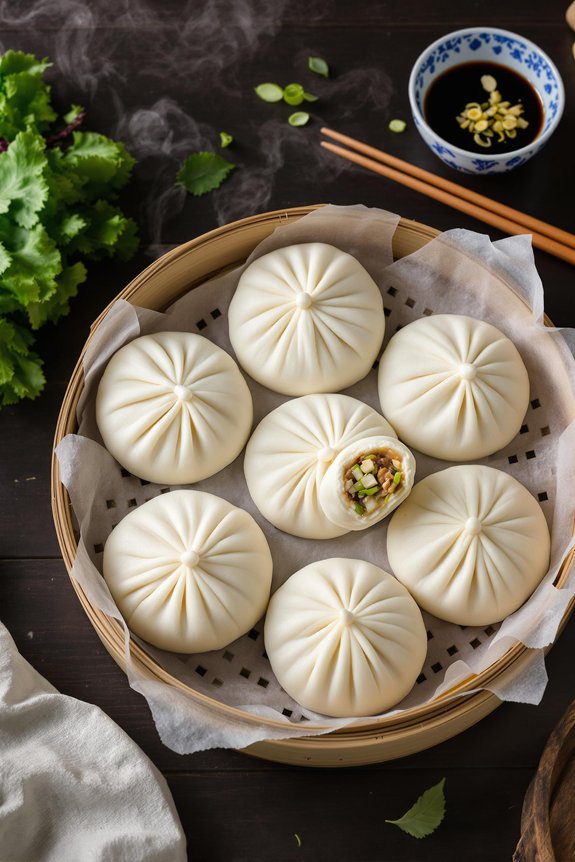
Why You’ll Love these Chinese Pork Bao-Zi
While many people feel intimidated by making steamed buns from scratch, these authentic pork bao-zi are absolutely worth the effort.
I promise that biting into a pillowy soft bun filled with savory pork and crisp cabbage will transport you straight to a Chinese street market.
What’s not to love? The dough, enriched with a touch of oil, creates that perfect tender texture.
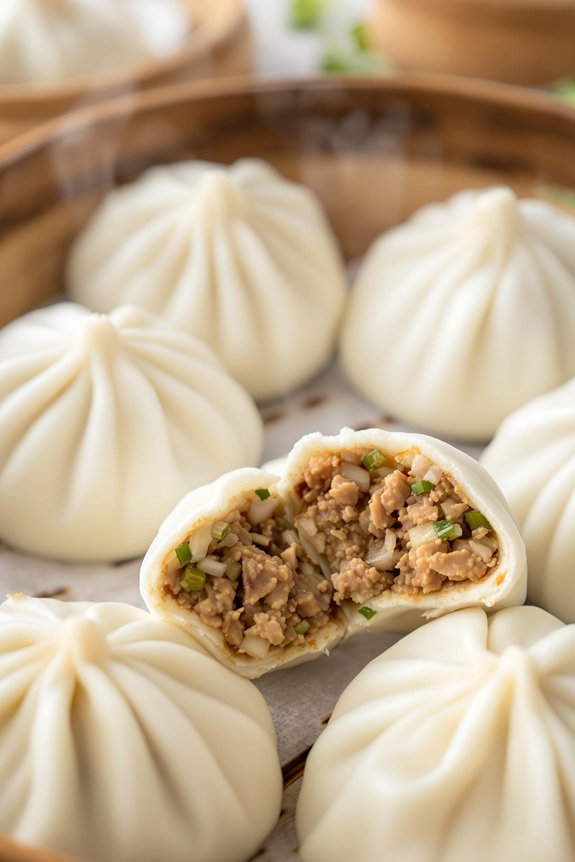
And the filling—oh, the filling—combines juicy ground pork with fresh vegetables and aromatic ginger, garlic, and green onions.
They’re completely customizable, freezer-friendly, and, dare I say, even better than takeout.
What Ingredients are in Chinese Pork Bao-Zi?
Making authentic Chinese pork bao-zi requires a careful balance of ingredients for both the dough and filling. The dough needs to be soft and pillowy, while the filling should be packed with savory flavors that complement the mild bread exterior.
When shopping for these ingredients, you’ll notice most are pantry staples, with a few Asian market necessities that bring those distinctive, traditional flavors we all crave in proper bao.
For the Dough:
- 300g all-purpose flour (medium gluten)
- 56g sugar
- 1 tablespoon cooking oil
- 1½ teaspoons baking powder
- 150g water
- 11g active dry yeast
For the Filling:
- 300g ground pork
- 300g Chinese cabbage (or bok choy)
- 4 tablespoons water
- 1 tablespoon sesame oil (preferably dark)
- 2 tablespoons soy sauce
- 1 teaspoon salt
- 1 teaspoon sugar
- 1 teaspoon rice wine
- 1 pinch of pepper
- Minced green onion
- Minced gingerroot
- Minced garlic
The quality of your pork matters tremendously in this recipe. Look for ground pork with a good fat-to-meat ratio—around 80/20 is perfect for juicy, flavorful bao.
For the vegetable component, while the recipe shows bok choy, traditional Chinese cabbage (napa cabbage) works beautifully too. The aromatic trio of ginger, garlic, and green onions creates that unmistakable Chinese flavor profile, so don’t skimp on these.
And remember, getting the moisture level right in your filling is vital—too wet and your buns will be soggy, too dry and they’ll lack that succulent quality that makes bao-zi so irresistible.
Recommended Products

Elevate Your Culinary Game! The Prime Home Direct 10" Bamboo Steamer Basket Set is your must-have kitchen companion! Made from 100% organic bamboo, this all-in-one set includes a 10" steamer basket, 2 sets of chopsticks, a ceramic dish, and 50 liners—perfect for steaming veggies, rice, and more. Ideal for food lovers looking to create healthier, tastier meals in no time!

Natural Bamboo Build: Handmade with bamboo and a woven lid for traditional steaming.
How to Make these Chinese Pork Bao-Zi
Making bao-zi might look intimidating, but the process breaks down into manageable steps that even beginners can master. Start with the dough by dissolving 11g of active dry yeast in 150g of water, then mix it with 300g all-purpose flour, 56g sugar, 1 tablespoon cooking oil, and 1½ teaspoons baking powder until smooth. This forms the foundation of your pillowy buns, so take your time to work the dough until it’s completely incorporated.
Let this mixture rise for 40 minutes somewhere warm in your kitchen—I like to cover mine with a damp cloth to prevent it from drying out.
While the dough rises, prepare your flavorful filling. First, blanch 300g of Chinese cabbage or bok choy briefly in boiling water, then immediately cool it in cold water to stop the cooking process. This step is essential—you want the greens softened but not mushy.
After mincing the cooled greens finely, squeeze out every last drop of moisture (seriously, get it as dry as possible or you’ll end up with soggy buns). Combine your dried greens with 300g ground pork, 4 tablespoons water, 1 tablespoon sesame oil, 2 tablespoons soy sauce, 1 teaspoon each of salt, sugar, and rice wine, plus a pinch of pepper and your minced aromatics (green onion, ginger, and garlic).
Mix thoroughly until everything is well combined and the mixture feels slightly sticky.
Now comes the fun part—assembly! After kneading your risen dough until smooth, divide it into 30 equal portions. Roll each piece into a circle about the size of your palm, slightly thicker in the center and thinner at the edges.
Place a tablespoon of filling in the middle of each dough circle, then gather the edges upward, pinching and pleating as you go to seal the bun. This pleating technique takes practice, so don’t worry if your first few look a bit rustic.
Once assembled, let the buns rise again for 40 minutes before steaming them. Bring water to a boil in your steamer, arrange the buns on parchment paper or cabbage leaves to prevent sticking, and steam over high heat for 6-8 minutes. Using a cast iron Dutch oven with a steamer insert provides excellent heat retention and even cooking for perfectly steamed bao-zi.
When done, they’ll be perfectly soft, slightly sweet on the outside, with a savory, aromatic filling that makes every bite absolutely worth the effort.
Chinese Pork Bao-Zi Substitutions and Variations
Although authentic Chinese pork bao-zi follows traditional ingredients, there’s plenty of room for creative adaptations when you’re working with what’s in your pantry.
The ground pork can be swapped for chicken, turkey, or even a vegetarian mix of crumbled tofu and mushrooms. No bok choy? Regular cabbage, spinach, or kale work beautifully in a pinch.
The flavor profile is flexible too. I love adding a dash of five-spice powder or hoisin sauce for depth.
You might consider black vinegar or chili oil if you crave tang or heat. Remember, the beauty of home cooking? Making it your own, one steamy, pillowy bun at a time.
Recommended Products

SEAL GOOD: dumplings will not leak when they are boiled. Sometimes the edges are not tight enough, because the flour each one used is different in viscosity, you can try to make the edge of the empanadas a little wet. (use the water or egg) then pressed it again to help seal it better than before.

Multi-Function: These dumpling wrapper make are suitable for making calzone, empanada, dumpling, pie, pierogi, ravioli, fried dumpling, etc.

🥟COMPLETE 7-PIECE DUMPLING MAKER SET Includes dumpling press mold, 3 dough cutter rings, filling spoon, and dough cutter tool — everything you need to make perfect dumplings at home.
What to Serve with Chinese Pork Bao-Zi
While these pillowy pork buns are certainly satisfying on their own, pairing them with complementary sides elevates the entire dining experience.
I love serving bao-zi with a simple dipping sauce of black vinegar and julienned ginger—the tangy acidity cuts through the richness perfectly.
For a complete meal, consider adding a light cucumber salad dressed with sesame oil and rice vinegar, or a bowl of hot and sour soup.
Chinese pickled vegetables make another fantastic accompaniment, don’t you think?
Some steamed greens with oyster sauce round out the nutritional profile while keeping everything authentically Chinese.
Recommended Products

𝗘𝗳𝗳𝗼𝗿𝘁𝗹𝗲𝘀𝘀 𝗪𝗲𝗶𝗴𝗵𝗶𝗻𝗴: Supports 5 units (oz/lb:oz/fl'oz/g/mL), tare function, and includes 2 AAA batteries for hassle-free operation

Contemporary Slim Design: Made of Stainless Steel Material; It is easy to use and clean; Provides accurate weight data with a user-friendly control panel and system; With high precision sensors to ensure correct performance and readouts

【PRECISE WEIGHT】 The digital food scale built-in four high-precision load sensors, quickly and accurately response 1g or 0.1oz increments when adding ingredients, its measuring range: 0.1oz to 22 lbs and 3g to 10kg(Min. weigh at 0.1oz or 3g).
Final Thoughts
These homemade bao-zi have become one of my absolute favorite weekend cooking projects.
There’s something deeply satisfying about working the dough with your hands, creating those perfect little pleats, and then watching them puff up gloriously in the steamer.
The combination of that slightly sweet, pillowy dough with the savory pork-vegetable filling is pure comfort food magic.