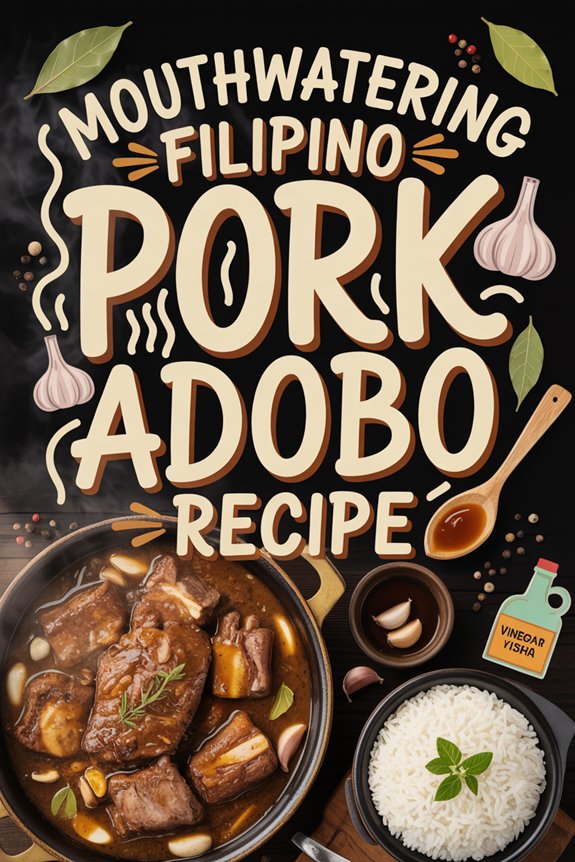
Why You’ll Love this Filipino Pork Adobo
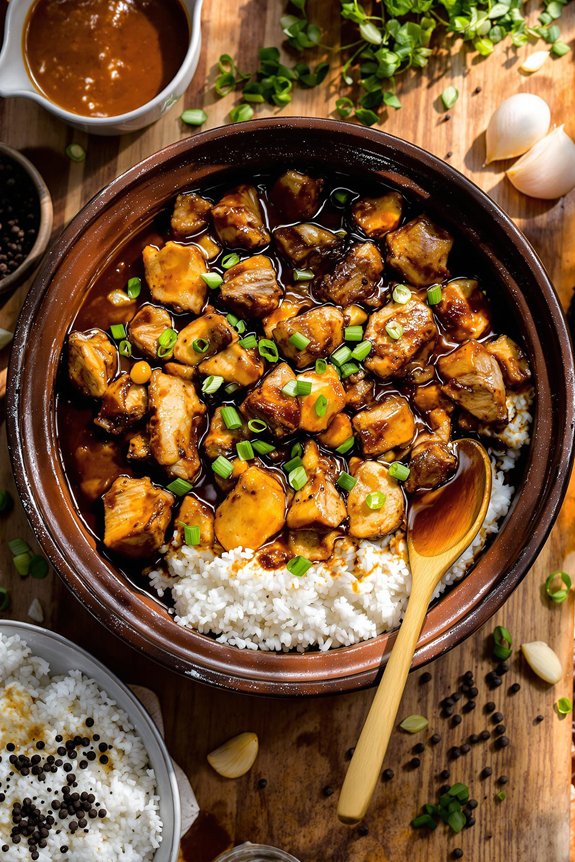
While many dishes claim to be the heart of a cuisine, Filipino Pork Adobo truly earns its place as the national dish of the Philippines.
I’m not exaggerating when I say this tender pork shoulder, simmered in vinegar, garlic, and pepper, creates the most incredible flavor profile you’ll ever taste.
What makes it so special? It’s the perfect balance of tangy, savory, and garlicky notes.
The meat becomes fork-tender, practically melting in your mouth. Plus, it’s surprisingly simple to prepare—just combine ingredients, boil, then simmer.
Can comfort food get any better than this?
What Ingredients are in Filipino Pork Adobo?
The heart of any great Filipino Pork Adobo lies in its short but mighty ingredient list. This is what makes adobo so beloved—it transforms a handful of pantry staples into something truly magical. The combination creates that perfect balance of sour, savory, and garlicky flavors that Filipino cuisine is known for.
And while the ingredient list might seem simple, each component plays a vital role in developing that distinctive adobo taste.
- 2 pounds pork shoulder
- 1/2 cup vinegar
- 1 head (full bulb) of pounded garlic
- 1 teaspoon ground black pepper
- Salt or soy sauce, to taste
- 2 cups water
When shopping for these ingredients, quality matters. Look for well-marbled pork shoulder, as the fat renders down during cooking to create incredible richness.
For the vinegar, many Filipino cooks prefer cane vinegar, but white or apple cider vinegar works wonderfully too. And don’t skimp on the garlic—yes, a whole head seems like a lot, but trust me, it mellows beautifully during cooking.
The recipe offers flexibility with either salt or soy sauce, which allows you to adjust the flavor profile slightly based on your preference. Want more umami depth? Go with soy sauce. Prefer a cleaner, brighter taste? Stick with salt.
Recommended Products

Even Heat Distribution Retention: This Dutch oven Made with heavy-duty enameled cast iron, ensures even heat distribution for perfect searing and slow cooking, locking in flavors. thickened walls lock in heat for slow braising, searing, and baking. Unlike thin pots that scorch food, this professional-grade Enameled cast iron pot maintains steady temperatures

IDEAL FOR FAMILY MEALS - Perfectly sized for families of 3–5 people, this 5.5QT Dutch oven handles everything from hearty soups and stews to one-pot dinners, pasta dishes, and Sunday pot roasts. Spacious enough for a whole chicken yet practical for everyday cooking, it delivers the ideal balance between daily family meals and weekend entertaining. Also well-sized for artisan bread bakers who want one pot for both family dinners and sourdough baking.

PREMIUM ENAMELED CAST IRON DUTCH OVEN WITH LID - Made from heavy-duty enameled cast iron, this Dutch oven with lid delivers even heat distribution and excellent heat retention for reliably cooking meals evenly and keeping them warm for longer. Use for soups, braising meats, roasting, simmering, and slow cooking without hot spots or scorching.
How to Make this Filipino Pork Adobo
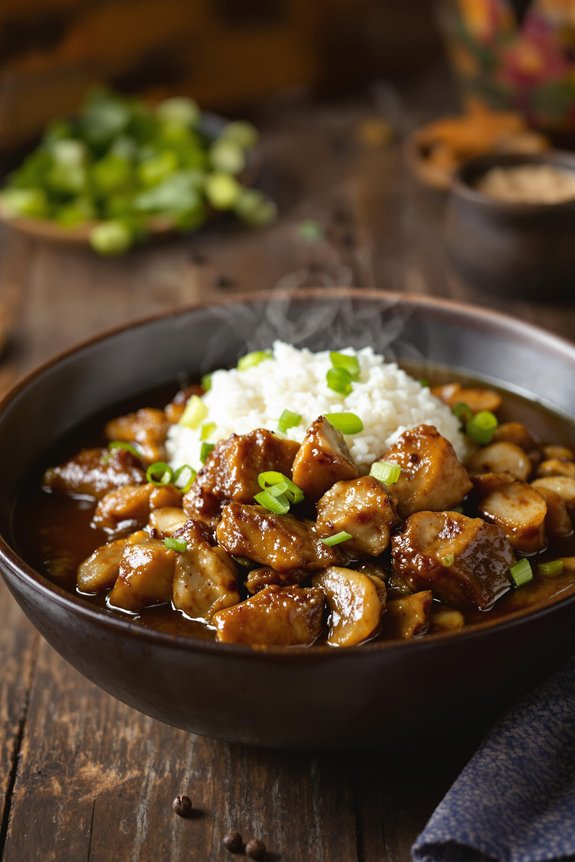
The beauty of Filipino Pork Adobo lies in its straightforward preparation—a true reflection of how the simplest cooking methods often yield the most flavorful results.
To begin, take your 2 pounds of pork shoulder and place it directly in a saucepan. No need to sear or brown the meat first, which might surprise some home cooks. Next, add the 1/2 cup of vinegar, the entire head of pounded garlic (yes, the whole bulb—this is where the magic happens), 1 teaspoon of ground black pepper, and your choice of salt or soy sauce to taste. Pour in 2 cups of water, which will form the base of your braising liquid.
Cover the saucepan with a lid and bring everything to a boil over medium-high heat. The kitchen will soon fill with an intoxicating aroma as the vinegar and garlic begin to work their alchemy on the pork.
Once boiling, reduce the heat to a gentle simmer—this is vital for developing those deep, complex flavors. The meat needs time to become tender, and rushing this process would be a culinary crime. Let it simmer until the pork is fork-tender, which typically takes about 45 minutes to an hour, depending on how large your pork pieces are. You’ll know it’s ready when a fork slides effortlessly into the meat.
For the most authentic experience, I recommend serving your pork adobo over a bed of steaming white rice, which acts as the perfect canvas for soaking up that gloriously tangy, garlic-infused sauce. For an elevated outdoor dining experience, consider cooking your adobo using an outdoor pizza oven which can reach high temperatures perfect for creating caramelized edges on the pork.
Some cooks like to reduce the sauce further after the meat is tender by removing the lid and allowing some of the liquid to evaporate, concentrating the flavors even more.
And if you can resist diving in immediately (harder than it sounds), adobo actually tastes even better the next day, after the flavors have had time to meld and deepen. This is comfort food that speaks to the soul of Filipino cuisine—unpretentious, deeply satisfying, and absolutely worth adding to your regular cooking rotation.
Filipino Pork Adobo Substitutions and Variations
Traditional Filipino pork adobo offers incredible flexibility, allowing you to adapt this beloved dish to your pantry contents or personal preferences.
Can’t find pork shoulder? No problem. Pork belly works beautifully for a richer version, while chicken thighs make a lighter alternative.
Vegetarians might try firm tofu or meaty mushrooms.
The vinegar is non-negotiable, but you can experiment. Rice vinegar creates a milder tang, while apple cider vinegar adds fruity notes.
Some regions add coconut milk for creaminess, bay leaves for depth, or chilis for heat.
My favorite twist? A tablespoon of brown sugar to balance the acidity.
Recommended Products

Versatile Capacity - A 3 qt saucepan is ideal for heating and simmering liquids, such as soups, sauces and gravies; while still can be used for sautéing and stir-frying small to medium-sized portions of ingredients, like vegetables, meat, or poultry.

Sturdy Construction - The Idymere pot features a tri-ply design with a food-grade 304 (18/8) stainless steel interior, a thick aluminum core, and a magnetic 430 stainless steel exterior. This construction of the sauce pot ensures even heating without hot spots and provides a non-reactive cooking surface that won’t impart flavors. Free from coatings or harmful substances, the cooking pot offers excellent rust and corrosion resistance while meeting health standards.

CONFIDENCE IN EVERYDAY COOKING — Cuisinart stainless steel is built for everyday cooks upgrading from worn cookware. This stainless steel pot delivers dependable performance with an uncoated surface. Backed by a lifetime warranty, it is the perfect sauce pan for households building a kitchen piece by piece.
What to Serve with Filipino Pork Adobo
Three perfect accompaniments elevate any Filipino pork adobo meal from delicious to unforgettable.
First, steamed white rice is non-negotiable—its fluffy texture soaks up that tangy, garlicky sauce like nothing else. Trust me, you’ll want to catch every drop.
Second, consider pickled vegetables for contrast. The bright acidity cuts through the richness of the pork, creating perfect balance with each bite.
Finally, a simple cucumber tomato salad adds freshness. Just slice, sprinkle with salt, and drizzle with vinegar.
The cool crispness against that warm, savory adobo? Pure magic.
Recommended Products

【Complete 5-Piece Cookware Set】Includes an 8" frying pan, 10" skillet, 2.8QT small Dutch oven, 3.5QT large Dutch oven, and 4.7QT large casserole. This navy blue enameled cast iron cookware set is ideal for frying, searing, simmering, braising, baking, and family meals.

Even Heat Distribution Retention: This Umite Chef Dutch oven Made with heavy-duty enameled cast iron, ensures even heat distribution for perfect searing and slow cooking, locking in flavors. thickened walls lock in heat for slow braising, searing, and baking. Unlike thin pots that scorch food, this professional-grade Enameled cast iron potSuperior heat retention after preheating (allow 5-7 mins for even distribution). CRITICAL: Always cool naturally for 45+ mins before cleaning. Thermal shock (hot-to-cold contact) cracks enamel. USE TIP: Preheat 2-3 mins on medium-low only

【All-in-One 5-Piece Cookware Set for Versatile Cooking】This complete enameled cast iron cookware set includes a 10" skillet, 8" frying pan, 2.8QT small Dutch oven, 3.5QT large Dutch oven, and 4.7QT large casserole with matching lids. Perfect for everyday tasks from frying eggs and sautéing vegetables to slow-cooking roasts, soups, stews and baking bread. Whether you’re preparing quick weeknight meals or hearty weekend feasts, this all-inclusive 5-piece set covers all your cooking needs
Final Thoughts
After spending time perfecting your pork adobo, you’ll understand why this dish has captured hearts worldwide.
There’s something magical about the way those simple ingredients—vinegar, garlic, pepper—transform humble pork shoulder into something extraordinary.
I believe adobo represents Filipino cuisine at its finest: unpretentious, deeply flavorful, and infinitely comforting.
Isn’t it amazing how the best dishes often have the simplest ingredients?