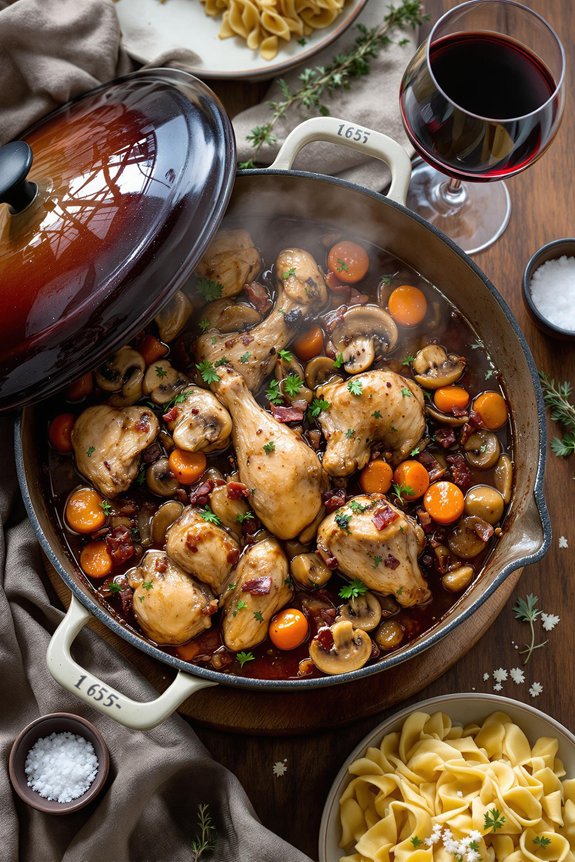
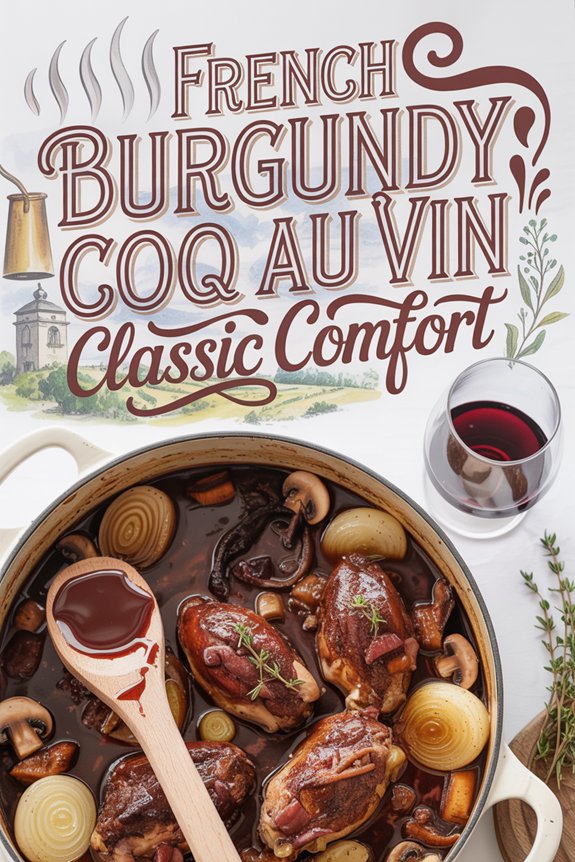
Why You’ll Love this French Burgundy Coq au Vin
When you’re craving a dish that transforms humble ingredients into something magnificent, this French Burgundy Coq au Vin delivers on every level.
The magic happens as chicken slowly simmers in wine until it’s fall-off-the-bone tender, while bacon adds that irresistible smoky depth.
I love how this recipe turns ordinary ingredients into something restaurant-worthy right in your kitchen.
The pearl onions and mushrooms absorb all that rich wine flavor, and that moment when you flambé the cognac? Pure culinary drama.
It’s comfort food with a sophisticated twist, perfect for impressing guests or treating yourself on a chilly evening.
What Ingredients are in French Burgundy Coq au Vin?
The heart and soul of a traditional Coq au Vin lies in its magnificent combination of simple ingredients that transform into something extraordinary when cooked together. This classic French dish relies on the magic of slow cooking to meld flavors, with chicken serving as the canvas for rich wine, aromatic vegetables, and herbs.
When shopping for ingredients, look for good quality chicken pieces and a decent bottle of Burgundy wine—remember, the wine you cook with should be good enough to drink!
- 4 slices bacon
- 2 chicken breasts, 2 chicken thighs, and 2 chicken legs
- 1/2 cup flour for coating
- Salt and pepper to taste
- 2 cloves garlic, chopped
- 2 cups white pearl onions, peeled
- 2 cups small mushrooms (slice larger ones)
- 2 carrots, cut in 2-inch pieces
- 1/2 cup cognac or brandy
- 1 bottle Burgundy wine
- 2 cups chicken broth
- 5 sprigs fresh thyme
- 2 teaspoons herbes de Provence
- 3 bay leaves
- Fresh parsley, chopped (for garnish)
- Optional: 1 tablespoon tomato paste or cornstarch for thickening
While the ingredient list might seem lengthy, don’t be intimidated—many items are pantry staples or easily found at your local market.
For the best flavor development, try to find fresh herbs rather than dried when possible, especially for the garnish.
And about that Burgundy wine? You don’t need to break the bank, but avoid cooking wines from the grocery store shelf. A mid-range bottle will greatly enhance the dish’s depth and complexity, giving you that authentic French bistro experience right at home.
How to Make this French Burgundy Coq au Vin
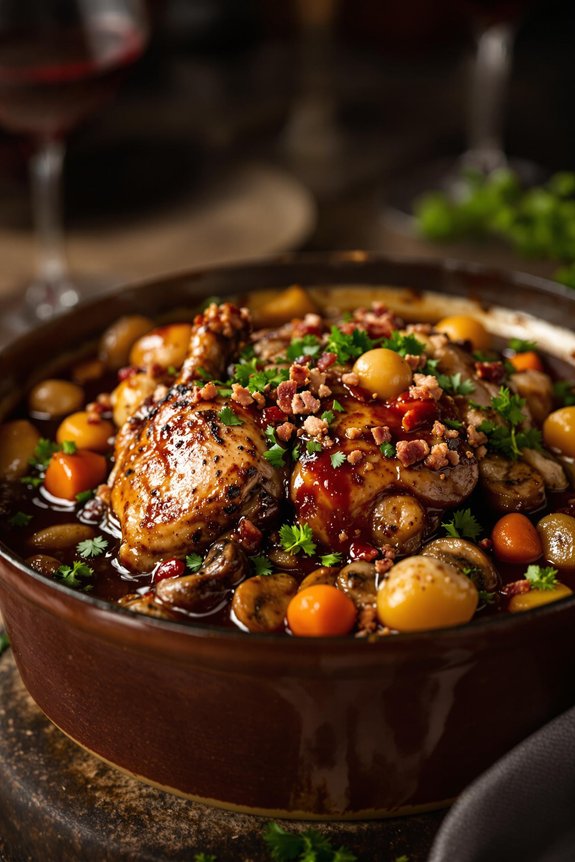
The magic of Coq au Vin begins with a sizzle and a savory foundation. Start by frying 4 slices of bacon in a large, heavy Dutch oven over medium heat until they’re delightfully crisp. This bacon isn’t just for flavor—it creates the fat that will transform your chicken into something extraordinary.
Once crispy, transfer the bacon to paper towels and save it for later (trust me, you’ll want those crunchy bits for garnish).
Now for the star of the show: the chicken. Season 2 chicken breasts, 2 thighs, and 2 legs generously with salt and pepper, then coat them in 1/2 cup of flour. Brown these pieces in that glorious bacon fat until they’re golden on both sides—this step is non-negotiable for developing deep flavor.
Once browned, add 2 chopped garlic cloves, 2 cups of peeled pearl onions, 2 cups of mushrooms, and 2 carrots cut into 2-inch pieces. Let them sauté for about 2 minutes until slightly softened.
Here comes the dramatic part (and my favorite): remove the pan from heat, pour in 1/2 cup of cognac or brandy, return the pan to the flame, and carefully ignite the alcohol with a long match. Stand back and watch the impressive flames dance—they’ll burn out within a minute, leaving behind incredible flavor.
Might want to keep that pot lid handy, just in case things get a little too exciting in your kitchen.
After the flambé excitement dies down, gradually stir in an entire bottle of Burgundy wine (yes, the whole thing) and 2 cups of chicken broth until well blended. For best results, consider using a luxury Italian cookware set that distributes heat evenly for perfect wine reduction. Add 5 sprigs of fresh thyme, 2 teaspoons of herbes de Provence, and 3 bay leaves to the pot.
Cover and let it simmer for a full hour—this is where patience pays off and the magic happens. For the final touch, uncover and continue simmering for 15 more minutes to let the sauce reduce and intensify.
Need a thicker sauce? A tablespoon of tomato paste adds both richness and body. To serve this masterpiece, spoon it over noodles or rice, then crown it with that reserved crumbled bacon and a generous sprinkle of fresh parsley.
The result? A dish that transports you straight to a cozy French bistro without leaving your dining room.
French Burgundy Coq au Vin Substitutions and Variations
Traditional recipes often serve as wonderful starting points rather than rigid rules, and I’m delighted to share some brilliant substitutions for this classic Coq au Vin.
Can’t find pearl onions? Regular chopped onions work beautifully.
No cognac handy? Try a splash of bourbon or skip the flambé altogether.
Red wine lovers can swap Burgundy for Pinot Noir or Merlot, while chicken thighs can replace the mixed pieces for juicier results.
For a lighter version, use skinless chicken and turkey bacon.
Vegetarians might enjoy a mushroom-focused “Champignons au Vin” with extra vegetables and hearty mushroom broth.
What to Serve with French Burgundy Coq au Vin
Pairing the right side dishes with your decadent Coq au Vin transforms an already impressive French classic into a complete dining experience worth savoring.
While the recipe suggests noodles or rice, I’m partial to buttery mashed potatoes that soak up that rich wine sauce. Heaven.
Crusty French bread works wonderfully too—perfect for that inevitable moment when you want to mop up every last drop from your plate.
For vegetables, consider roasted Brussels sprouts or a simple green salad with a light vinaigrette to cut through the richness of the dish.
Nothing too complicated, just complementary flavors.
Final Thoughts
Beyond just selecting the right accompaniments, mastering the art of French Burgundy Coq au Vin represents a journey into the heart of classic French cuisine.
I’m convinced there’s something magical about this dish—the way the wine transforms ordinary chicken into something extraordinary.
The process itself, from flambéing the cognac (carefully, of course) to the slow simmer that fills your kitchen with irresistible aromas, becomes a ritual worth savoring.
What I love most? It’s forgiving yet impressive. You don’t need a culinary degree, just patience and quality ingredients.
Ready to create your own French masterpiece at home?